Team-Building Games: 15 Games by Goal, Team Size and Venue
Your team has been working together for months, and many people know each other only from their email signature. You go away for a day, and at lunch everyone is looking at their phone and conversations don’t get going. Here are 15 team-building games, arranged by goal: warm-up, trust, shared task, outdoors and online. For each there is a number of people, time, materials and rules, plus the three questions that turn the game into a lesson for work.
In short: first choose the goal, then the game. To help people get to know each other, 10–15 minutes of warm-up is enough. For communication and trust, play in pairs. For working under pressure, give a shared task with a clock. After each game, leave 5–10 minutes for discussion, otherwise only the fun remains.
For example: a team of 20 people, half a day at a hotel for team-building. You start with “Two Truths and a Lie,” continue with the spaghetti tower in teams and finish with a short conversation about what worked. Facilitators and ready-made team-building programs are in the catalogue.
How to Choose Team-Building Games: Goal, Number of People, Time
Three questions decide the choice. What do you want to change in the team? How many people are playing at once? How much time do you have, together with the discussion after the game?
Game | Goal | People | Time | Venue |
|---|---|---|---|---|
Two Truths and a Lie | getting acquainted | 5–12 per group | 10–15 min | anywhere, online |
Three Things in Common | mixing departments | groups of 3–4 | 10 min | anywhere |
Show Without Words | creativity, breaking the ice | groups of 4–6 | 10–15 min | hall |
Minefield | trust, precise instructions | pairs | 20–30 min | yard, large hall |
Blind Drawing | communication | pairs | 10–15 min | table |
Human Knot | coordination | 8–12 in a circle | 15–20 min | hall, outdoors |
Blind Square | leadership, listening | 6–15 | 20–30 min | hall, outdoors |
Spaghetti Tower | working under pressure, prototyping | teams of 4 | 45 min with discussion | tables |
Falling Egg | planning, resources | teams of 3–5 | 45–60 min | hall + staircase |
Escape in a Box | problem-solving | teams of 4–6 | 45–60 min | hall |
Photo Quest | cohesion, roles | teams of 4–6 | 60–120 min | outdoors, city |
The Web | planning, support | 8–12 | 20–30 min | yard, hall |
Online Quiz | including everyone | unlimited | 20–30 min | online, mixed team |
Object from the Desk | getting acquainted at a distance | up to 15 | 15–20 min | online |
Shared Story | listening, improvisation | 5–10 | 10–15 min | online, anywhere |
For example: you have 15 minutes at the start of the annual meeting. Choose a warm-up, not the tower or the egg, because tasks with a shared goal need at least 45 minutes to have time for discussion too.

Quick Warm-Up Games (Up to 15 Min)
The warm-up is for the first minutes, when people are still standing in groups by department. No materials and no winners.
1. Two Truths and a Lie
Goal: getting acquainted, breaking the ice · People: 5–12 per group · Time: 10–15 min · Materials: none
How to play: everyone says three statements about themselves, two true and one made up but plausible. The others vote on which is the lie, then the author tells the story behind the true ones.
2. Three Things in Common
Goal: mixing people from different departments · People: groups of 3–4 · Time: 10 min · Materials: paper and pen per group
How to play: the groups have 5 minutes to find three things that are common to all of them, without the obvious “we work here.” For example: everyone has an older sister and can’t stand coffee. Each group reads its three out loud.
3. Show Without Words
Goal: creativity, laughter at the start · People: groups of 4–6 · Time: 10–15 min · Materials: ordinary objects (spoon, stapler, scarf)
How to play: one person from each group takes an object and, without words, shows a new, invented use for it. The group guesses what they are showing. The most inventive idea wins, not the fastest.
Trust and Communication Games
Here people play in pairs or in a small circle and depend on the other person’s words. The lesson is almost always about how unclear our usual instructions are.
4. Minefield
Goal: trust, precise and short instructions · People: pairs, up to 5 pairs on the field · Time: 20–30 min · Materials: blindfolds, soft obstacles (cones, balls, empty bottles)
How to play: one of the pair is blindfolded, the other guides them through the field only with words, without touching them. If they “hit a mine,” the pair starts over. Play on a flat and soft surface, without sharp objects.
5. Blind Drawing
Goal: communication, the difference between what is said and what is understood · People: pairs · Time: 10–15 min · Materials: pictures, paper, pen
How to play: the two sit back to back. One describes the picture without naming the object (they don’t say “apple,” but “a circle with a small tail on top”), the other draws. Then they compare the original and the drawing.
6. Human Knot
Goal: coordination, patience · People: 8–12 in a circle · Time: 15–20 min · Materials: none
How to play: everyone in the circle takes a random person opposite with their right hand, then another with their left. The group must untangle back into a circle without letting go of hands. With more people, make several circles.
7. Blind Square
Goal: leadership, listening · People: 6–15 · Time: 20–30 min · Materials: a long rope, blindfolds
How to play: everyone holds the rope and puts on blindfolds. The task is to form an exact square without seeing. For a harder version, tell two people not to speak at all.
Games with a Shared Task (Tower, Egg, Escape)
A shared goal, limited materials and a clock. These games show who takes the lead, who stays silent and how the team makes decisions under pressure.
8. Spaghetti and Marshmallow Tower
Goal: working under pressure, rapid prototyping · People: teams of 4 · Time: 18 min to build, about 45 min with discussion · Materials: per team 20 dry spaghetti, 1 m tape, 1 m string and 1 marshmallow
How to play: the teams build the tallest free-standing tower, and the marshmallow must be whole at the top. When time is up, no one holds the tower. It is measured from the table to the top of the marshmallow.
9. Falling Egg
Goal: planning, allocating resources · People: teams of 3–5 · Time: 45–60 min · Materials: one raw egg per team (and spares), straws, tape, newspapers, balloons, rubber bands
How to play: in 20–30 minutes the team makes a protection for the egg from the available materials. Then everyone drops the eggs from the same height, for example from a stair landing, with no people below. Teams with an intact egg win.
10. Escape in a Box
Goal: problem-solving, dividing tasks · People: teams of 4–6 · Time: 45–60 min · Materials: a box with a combination padlock, 3–4 riddles whose answers give the digits
How to play: each team receives a locked box and an envelope with the first riddle. Each solved riddle leads to the next, and the last gives the code. If you don’t have time to prepare riddles, take the teams to an escape room.
Outdoor Team-Building Games
Outside, people move, talk along the way and see their colleagues outside their office roles.
11. Photo Quest (Treasure Hunt)
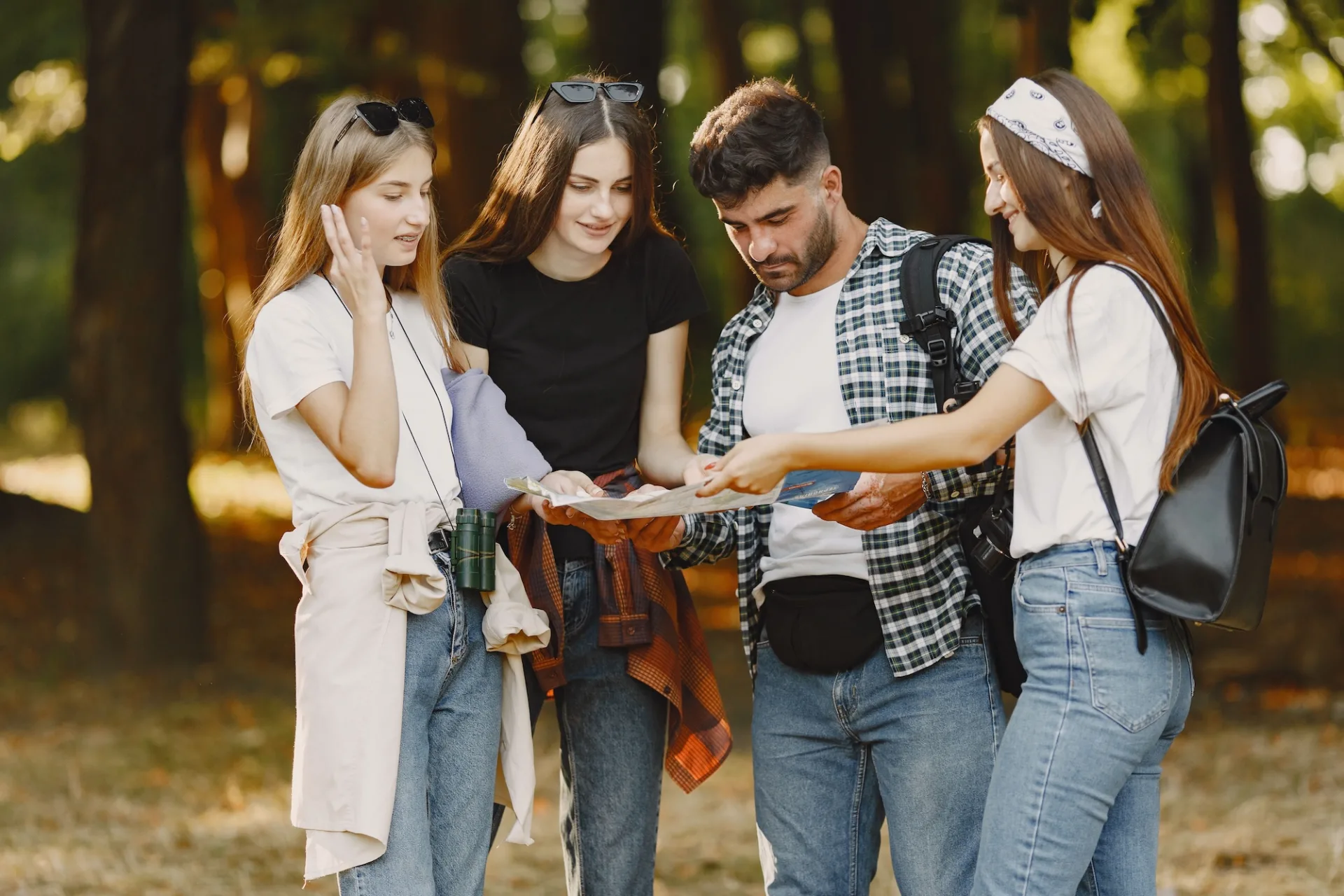
Goal: cohesion, allocating roles · People: teams of 4–6 · Time: 60–120 min · Materials: a list of tasks, a phone for photos, a map of the area
How to play: each team receives the same list, for example a photo of the whole team in the air, something red, a conversation with a local person about the best place nearby. The team with the most completed tasks by the deadline wins. Hide small prizes along the route too.
12. The Web
Goal: planning, mutual support · People: 8–12 · Time: 20–30 min · Materials: rope or twine stretched between two trees or posts like a net with openings
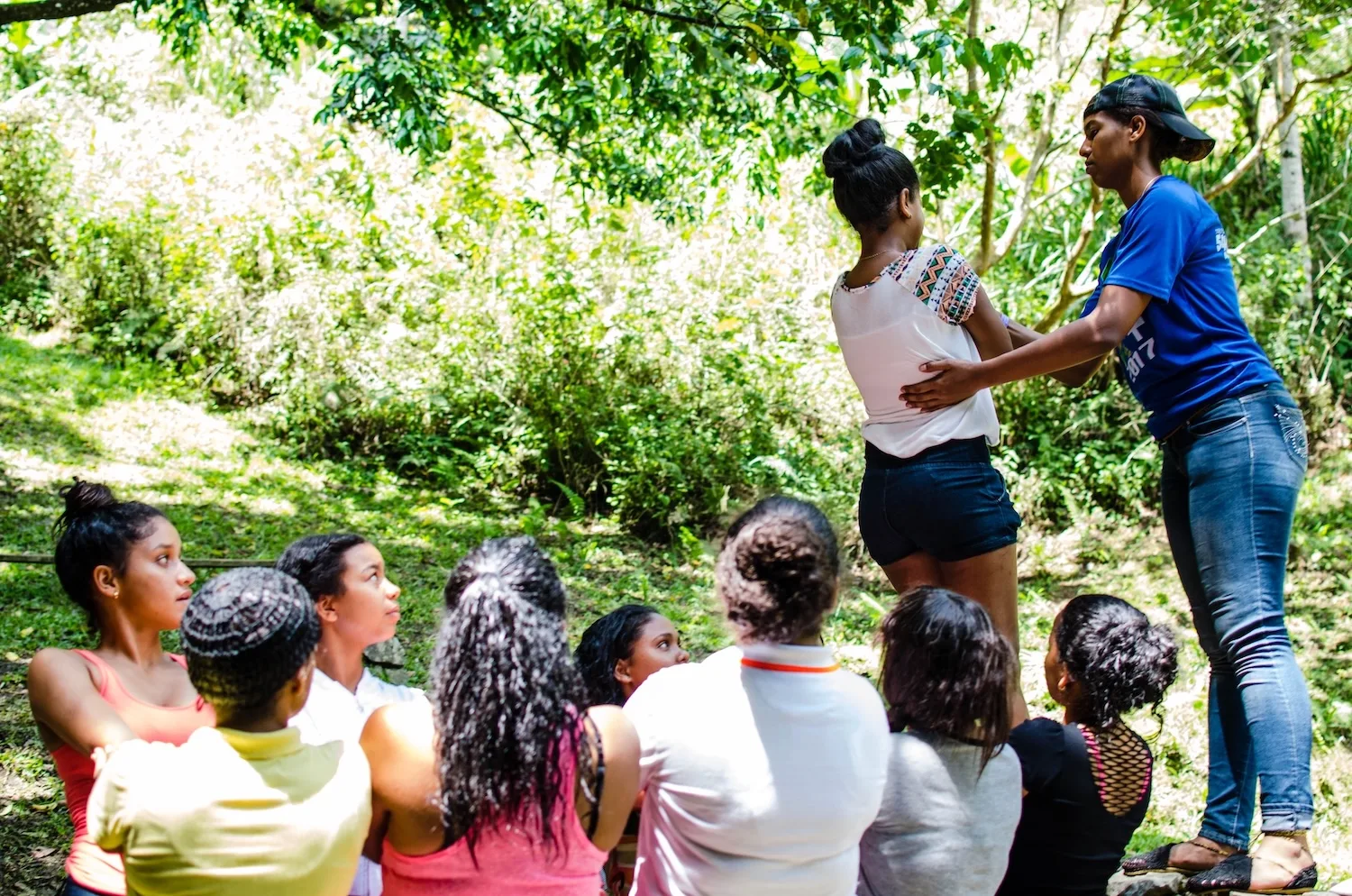
How to play: the whole team must get to the other side through the openings without touching the rope. Each opening can be used only once. If someone touches the net, the team starts over. When lifting a person, protect their neck and shoulders, and the facilitator stops the game at any risky movement.
Games for Online and Mixed Teams
When some people are in the office and some in another city, play online with both groups, each from their own computer. That way no one watches from the corner of the conference room. Breakout rooms in Teams and Zoom divide the meeting into small teams.
13. Online Team Quiz
Goal: including everyone, shared laughter · People: unlimited, in teams in breakout rooms · Time: 20–30 min · Materials: an online quiz tool, 15–20 questions
How to play: mix general-knowledge questions with questions about the team, for example “Whose baby photo is this?” with photos collected in advance. The teams answer from the breakout rooms, and the points are shown on the main screen.
14. Object from the Desk
Goal: getting acquainted at a distance · People: up to 15 per meeting · Time: 15–20 min · Materials: camera
How to play: everyone has 60 seconds to show an object next to them and tell its story. For example: a cup from the first marathon or a child’s drawing. With a larger team, divide into breakout rooms.
15. Shared Story
Goal: listening, improvisation · People: 5–10 · Time: 10–15 min · Materials: none
How to play: the facilitator says the last sentence of the story, for example “And so the office ended up on the Moon.” Each person in turn adds one or two sentences, and the story must reach that ending.
3 Questions After Every Game (Debriefing)
The debriefing is a short conversation after the game. Without it, the game remains just fun; with it, it becomes a lesson for work. Use the three-question framework known from training as “What? So what? Now what?”
What happened? Only facts: who suggested what, when the team changed the plan, who was silent.
What does that mean for us? Where do we see the same thing at work: in meetings, in handing over tasks, in emails.
What will we do differently? One specific thing for next week, not a general wish.
For example: after the spaghetti tower. What happened? “We planned for 15 minutes and put the marshmallow on last; the tower fell.” What does it mean? “That’s how we launch projects too; we test only at the end.” What do we change? “We’ll show the first version to the client in the first week.” Tom Wujec, who popularized the game (invented by Peter Skillman), says that kindergarten children build taller towers than business-school graduates because they try early and correct as they go.
Allow 5–10 minutes after each game. First everyone thinks alone for a minute, then the team talks. The facilitator asks the questions and does not give ready-made answers.

Team-Building Ideas Beyond Games
Team-building isn’t always a game. Sometimes something that makes people equal and gets them talking works better. Here are team-building ideas that don’t need a facilitator:
Short after-work meetups. Once or twice a month, snacks and drinks at a nearby place or pizza in the office. An hour without an agenda does more than one big event a year.
An overnight trip an hour or two away. A house or hotel outside the city, with part of the team taking on the cooking. For example: hotels close to you with indoor and outdoor areas and free parking, or with a spa centre and pools for a larger group.
A sports day. Volleyball, small-goal football, dodgeball with soft balls. On the field you see a different dynamic from the one in the office.
The team plans it itself. Give a shared goal and a budget, and divide the organization among mixed groups that don’t usually work together. The planning itself is already team-building.
A shared table. Dinner without a program and without presentations. The simplest option, which almost always works.
If the team-building is at the end of the year, see also Christmas party ideas for the evening part.
When to Hire a Facilitator or Organizer
You can run a warm-up or a quiz yourself. A facilitator makes sense when:
the group is over 30–40 people. Someone has to divide the teams, keep time and hold everyone’s attention;
the game is outdoors or in an unfamiliar city. Route, permits, safety, a backup plan for rain;
you want to play too. The organizer who measures the towers doesn’t take part;
the goal is a specific skill (feedback, decision-making). An experienced facilitator leads the debriefing without steering toward the “right” answer.
For example: a company of 60 people wants a day of team games and dinner in one place. The facilitator takes on the games, and the hall and kitchen are at the hotel. You will find facilitators and programs in the team-building catalogue, and photo booths, music and other entertainment for a corporate event in a separate category.
Frequently Asked Questions
How long does one team-building game last?
Warm-ups last 10–15 minutes, trust games 15–30, and tasks with a shared goal 45–60 minutes together with the discussion after them. For half a day, plan 3–4 games with breaks between them.
Games for 50+ people?
Divide the large team into teams of 4–6 people who play the same game at the same time, for example the spaghetti tower or the online quiz. That way everyone takes part instead of watching. At that size it is good to have a facilitator and assistants.
Is a facilitator mandatory?
No. For a small team and simple games, one colleague who knows the rules and keeps time is enough. A facilitator is worth it for a large group, outdoor games or when you want a debriefing with a real lesson for work.